
BLOG
AhnLab Policy Center: Leading the Charge in Centralized Cyber Governance

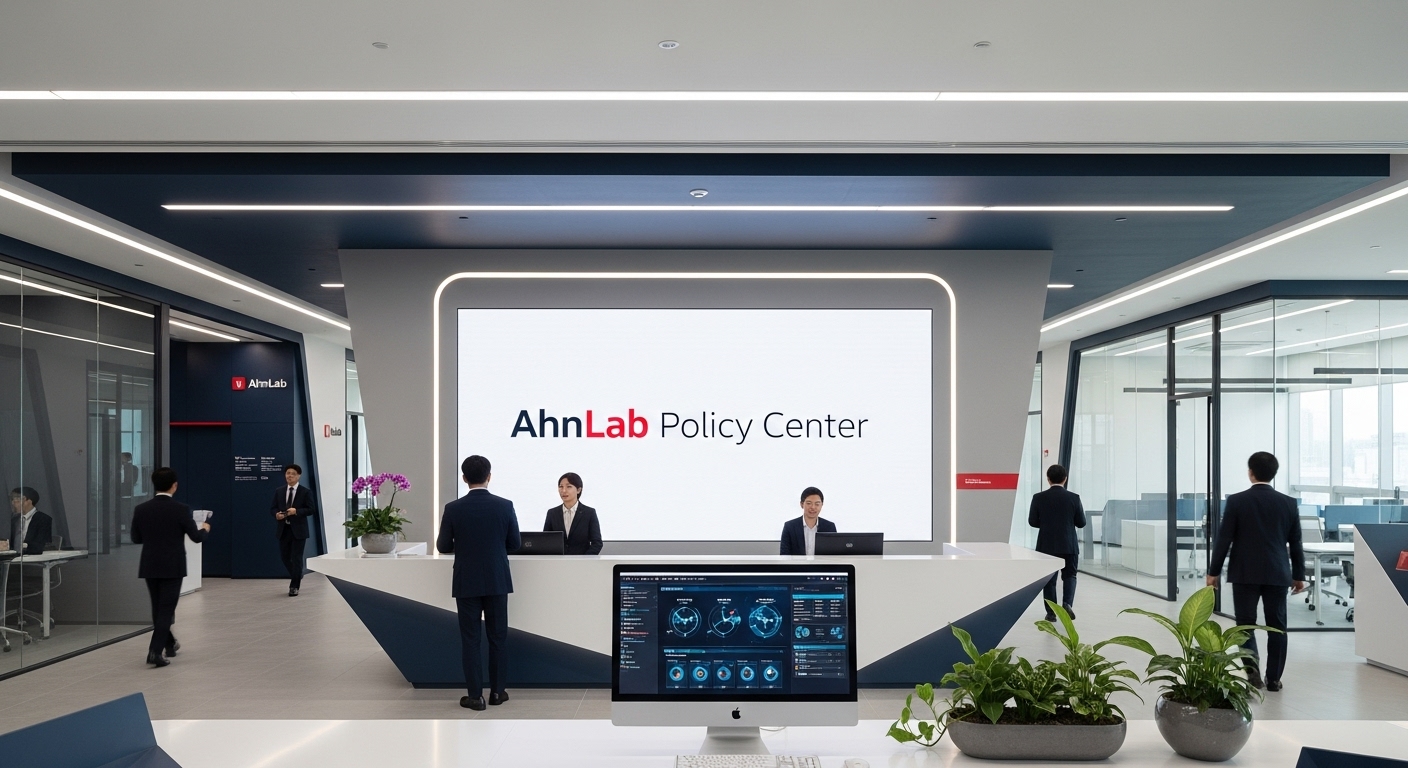
In a digital age where threats evolve faster than ever, the most influential technology leaders are those who balance technical excellence with meaningful impact — not just in security, but in governance, trust, and organizational culture. One standout in this new generation of cybersecurity leadership is the AhnLab Policy Center. More than a mere management console, it has become a symbol of how responsible governance, strategic alignment, and community protection can converge.
This article explores the journey of the AhnLab Policy Center, its philosophy of policy-driven security, and why it represents a shift in how organizations imagine centralized cyber control.
What Is the AhnLab Policy Center?
The AhnLab Policy Center (APC) is AhnLab’s centralized management platform for configuring, deploying, and monitoring security policies across endpoints and networks. It allows IT and security teams to define rules — for antivirus, firewall, device control, updates, and more — then roll them out, monitor compliance, and respond to deviations in real time.
In essence, it’s not just a tool — it’s a governance engine. It emphasizes that security is a shared responsibility, not a siloed IT function. By enabling consistent enforcement of policies and centralized visibility, APC helps organizations build resilience, trust, and strategic alignment around cybersecurity.
From small enterprises to large infrastructures, the AhnLab Policy Center stands as evidence that excellence in security must be married with clarity, control, and values.
A Governance Philosophy Rooted in Purpose
At the core of the AhnLab Policy Center’s mission is purpose-driven governance. Its design philosophy rests on three interlocking pillars:
-
Clarity: Policies should be transparent, auditable, and understandable across roles (IT, compliance, executive).
-
Consistency: The same rules applied everywhere, reducing drift, gaps, and confusion.
-
Accountability: Logs, change histories, and compliance metrics ensure that policy violations are visible and remediated.
In other words, APC models a belief that cybersecurity is not merely technical—it’s organizational. The tool reinforces that decisions, risks, and protections are part of the institution’s identity.
This philosophy aligns with emerging expectations in cybersecurity leadership: that tools should not only defend but also embed trust, visibility, and shared ownership.
Bridging Technical Control with Institutional Trust
Where the AhnLab Policy Center truly shines is in bridging raw technical control with institutional legitimacy. It empowers organizations in several key ways:
-
Policy Templates & Versioning: Administrators can craft actionable policy templates and manage version history, enabling consistent governance even as threats evolve.
-
Role-Based Access Control (RBAC): By segmenting which users or teams can edit or apply policies, APC reduces risk, promotes least privilege, and enables separation of duties.
-
Real-Time Monitoring & Alerts: Endpoint status, compliance deviations, and threat events feed into dashboards, enabling leaders to respond proactively rather than reactively.
-
AD / Directory Integration: By integrating with identity systems, policy enforcement aligns with user roles and organizational structure — strengthening coherence across IT layers.
When viewed through a leadership lens, APC becomes a tool for trust — a mechanism that translates strategic objectives (e.g. “we will protect customer data”) into enforceable and visible actions.
Digital Influence: How APC Shapes Mindsets
In today’s hyperconnected organizations, security tools often carry symbolic meaning. The AhnLab Policy Center isn’t just a backend utility — it’s a visible marker of an organization’s commitment to discipline, risk management, and integrity.
By promoting policy transparency, compliance dashboards, and reporting, APC becomes a conversation starter across departments: executives ask about gaps, compliance teams track trends, and operations monitor endpoints. This digital influence helps shift culture — from blame after breach, to prevention through shared awareness.
Especially among younger IT professionals, tools that support visibility, auditability, and shared accountability resonate deeply. APC thus becomes not only a technical cornerstone but a leadership brand: demonstrating that governance, not just defense, defines success.
A Model for Next-Gen Cyber Leadership
The rise of the AhnLab Policy Center reflects broader shifts in how organizations expect security leadership to operate. For many teams — especially Millennials and Gen Z entering the field — they look to systems that represent:
-
Trust and transparency: Tools that don’t hide complexity but make it understandable.
-
Ethical alignment: Solutions that respect privacy, policy, and corporate values.
-
Resilience over rigidity: Ability to adapt policies fluidly, respond to new threats, and iterate without chaos.
By embedding these expectations into its design and usage, APC becomes more than a product — it becomes a model for how technology can serve not just infrastructure, but values.
Challenges and Opportunities
Like any significant system, the AhnLab Policy Center must navigate trade-offs and challenges on its path forward:
-
Balancing flexibility and control: Too rigid policies can stifle innovation; too loose, and risk proliferates.
-
Gaining stakeholder buy-in: Not all departments understand or trust centralized policy enforcement — culture shifts are needed.
-
Scaling complexity: As environments grow (hybrid-cloud, IoT, mobile), APC must evolve to handle diversity of endpoints.
-
Staying ahead of threats: Policies must evolve faster than threat actors, requiring ongoing updates and adaptive frameworks.
Yet these challenges are also opportunities. APC’s architecture — with versioning, monitoring, and modular templates — allows it to transform obstacles into strengths. The system’s design encourages evolution, not stagnation.
Leadership Beyond the Interface
The AhnLab Policy Center doesn’t operate in a vacuum. Its success hinges on people: security teams, compliance officers, IT leaders, executives, and users. The best deployments become collective ventures where:
-
Security leaders use APC reporting to brief executives and guide strategy.
-
Compliance teams derive evidence of controls and audit trails.
-
IT operations adjust policies based on performance indicators.
-
Users see enforcement not as punishment, but as alignment with organizational integrity.
In this way, APC helps shape an ecosystem of shared responsibility. Its interface becomes the stage on which trust, accountability, and governance are practiced, not merely coded.
Looking Ahead: The Future of Policy-Driven Governance
As threats continue to morph and organizations become more distributed, the role of platforms like the AhnLab Policy Center will only grow. The future may include:
-
AI-assisted policy suggestions: Automated tuning of rules based on behaviors and threat modeling.
-
Policy drift detection: Systems that detect when endpoints stray from norms and suggest remediation.
-
Cloud-native extensions: Deeper integration with cloud workloads, containers, and hybrid architectures.
-
Privacy-aware policies: Embedding privacy controls and data governance into policy layers, not just security.
Ultimately, APC points toward a future where policy isn’t a static document — but a living, responsive, ethical infrastructure. Organizations that adopt this view will lead not just in security, but in trust, culture, and mission.


Introduction
In a world where information moves faster than ever, finding a reliable and easy-to-consume news source is essential. Breezy News has emerged as a modern platform designed to deliver fresh updates in a quick, accessible, and engaging way. Whether you are looking for breaking news, local updates, or trending stories, Breezy News aims to keep you informed without overwhelming you.
What is Breezy News?
Breezy News is a digital-first news platform that focuses on providing concise, timely, and reader-friendly content. Unlike traditional outlets that may present lengthy reports, Breezy News emphasizes clarity and speed, making it ideal for modern audiences.
Core Focus Areas
- Breaking news updates
- Local and community stories
- Trending topics
- Lifestyle and human-interest content
- Quick-read articles
How Breezy News Works
The platform is built around simplicity and accessibility.
Content Delivery
Articles are designed to be short, informative, and easy to read on mobile devices.
Real-Time Updates
News is published quickly to keep readers informed about current events.
Digital Accessibility
Users can access content through:
- Websites
- Social media platforms
- Mobile-friendly interfaces
Key Features of Breezy News
1. Fast and Fresh Updates
Breezy News focuses on delivering news as it happens, ensuring readers stay current.
2. Easy-to-Read Format
Short paragraphs and simple language make content accessible to all readers.
3. Wide Content Variety
From local updates to global trends, the platform covers diverse topics.
4. Mobile Optimization
Designed for users who consume news on smartphones and tablets.
Why Breezy News is Gaining Popularity
Several factors contribute to its growing appeal:
- Quick and digestible content
- Focus on relevant and trending topics
- Strong presence on social media
- User-friendly reading experience
In an age of information overload, platforms like Breezy News provide a refreshing alternative.
Role in Modern Digital Media
Breezy News reflects the shift toward:
- Short-form journalism
- Real-time reporting
- Audience-focused storytelling
It aligns with how modern readers prefer to consume news—quickly, clearly, and on-the-go.
Benefits of Using Breezy News
Saves Time
Readers can stay informed without reading lengthy articles.
Easy Accessibility
Available across multiple devices and platforms.
Engaging Content
Designed to keep readers interested and informed.
Community Connection
Often highlights local stories that matter to readers.
Challenges Facing Platforms Like Breezy News
Despite its advantages, there are challenges:
- Balancing speed with accuracy
- Competing with larger media outlets
- Avoiding misinformation in fast reporting
- Maintaining credibility
Successful platforms must ensure fact-checking and responsible journalism.
How to Get the Most Out of Breezy News
To use the platform effectively:
- Follow official pages for updates
- Cross-check important news with reliable sources
- Engage with content for better recommendations
- Stay aware of trending topics
Conclusion
Breezy News represents the future of digital journalism—fast, accessible, and reader-focused. With its emphasis on fresh updates and simplified storytelling, it has become a go-to source for modern news consumers.
FAQ’s
1. What is Breezy News?
Breezy News is a digital news platform that provides quick and easy-to-read updates on current events and trending topics.
2. Is Breezy New’s reliable?
It aims to provide timely information, but readers should verify important news from multiple trusted sources.
3. What type of content does Breezy New’s cover?
It covers breaking news, local updates, lifestyle topics, and trending stories.
4. How can I access Breezy New’s?
You can access it through its website, social media platforms, and mobile devices.
5. Why is Breezy New’s popular?
Its short, engaging, and mobile-friendly content makes it appealing to modern readers.

Introduction
The term Chainiste is not widely defined in mainstream dictionaries, yet it has begun appearing in various online discussions, niche communities, and conceptual frameworks. Whether used in technology, philosophy, or branding, Chainiste carries an air of mystery that sparks curiosity.
This guide explores what Chainiste could mean, where it might come from, and how it is being interpreted in modern contexts.
What is Chainiste?
At its core, Chainiste appears to be a conceptual or emerging term rather than a strictly defined word. It is often interpreted in multiple ways depending on context.
Possible Interpretations
- A person or system connected to chains or networks
- A philosophy centered on interconnected systems
- A digital or blockchain-related concept
- A brand or identity built around connectivity
Because the term lacks a fixed definition, it is considered flexible and evolving.
Etymology and Origins
The word “Chainiste” likely derives from:
- “Chain” – representing connection, sequence, or linkage
- “-iste” – a suffix often used to describe a follower, specialist, or practitioner
Together, the term could suggest “one who works with or believes in chains or interconnected systems.”
Chainiste in Technology
One of the most common interpretations of Chainiste is in the tech world, especially linked to Blockchain.
Possible Tech Meanings
- A blockchain enthusiast or expert
- A developer working with decentralized systems
- A supporter of distributed ledger technology
In this sense, a Chainiste might represent someone deeply involved in modern digital infrastructure and decentralized innovation.
Chainiste as a Philosophy
Beyond technology, Chainiste can also be viewed as a philosophical concept.
Core Ideas
- Everything is interconnected
- Actions create chains of consequences
- Systems influence one another continuously
This aligns with broader ideas found in systems thinking and network theory.
Chainiste in Digital Culture
In online communities, Chainiste may be used as:
- A username or identity
- A niche community label
- A conceptual brand name
It reflects modern internet culture where new terms emerge organically and gain meaning through usage rather than formal definition.
Applications of the Chainiste Concept
1. Technology & Innovation
Used to describe professionals working in blockchain or network systems.
2. Business & Branding
Companies may adopt the term to represent connectivity and modern thinking.
3. Philosophy & Thought Leadership
Represents interconnected thinking and systemic awareness.
4. Creative Fields
Writers and creators may use it symbolically to represent relationships and continuity.
Why Chainiste is Gaining Attention
Several factors contribute to its rising interest:
- Growth of blockchain and decentralized systems
- Increased focus on interconnected digital ecosystems
- Curiosity around unique and modern terminology
- Branding appeal due to its futuristic tone
Challenges in Defining Chainiste
Despite its appeal, the term faces limitations:
- No official or standardized definition
- Multiple interpretations leading to confusion
- Lack of academic or institutional recognition
This makes it more of a conceptual keyword than a formal term.
Future of Chainiste
The future of Chainiste depends on how it is adopted:
- It could become a recognized term in tech communities
- It may evolve into a brand or movement
- It could remain a niche concept with flexible meaning
Like many modern digital terms, its value lies in how people use and define it over time.
Conclusion
Chainiste is a fascinating example of how language evolves in the digital age. Whether viewed through the lens of Blockchain, philosophy, or branding, it represents the idea of connection and interconnected systems.
FAQ’s
1. What does Chainiste’s mean?
Chainiste’s is an emerging term often associated with interconnected systems, blockchain, or conceptual philosophies.
2. Is Chainiste a real word?
It is not officially defined in dictionaries but is used in niche and digital contexts.
3. Is Chainiste related to blockchain?
Yes, it is often interpreted as being connected to blockchain and decentralized technologies.
4. Can Chainiste be used as a profession?
Informally, it could describe someone working with network systems or blockchain technologies.
5. Why is Chainiste gaining popularity?
Its modern, flexible meaning and connection to digital innovation make it appealing in online communities.

Introduction
Vivek Mehra stands out as a dynamic leader whose career spans corporate leadership, entrepreneurship, education, and thought leadership. His journey reflects a blend of innovation, resilience, and a deep commitment to knowledge dissemination—making him a notable figure in the global publishing and education ecosystem.
Early Life and Educational Foundation
While detailed early-life records are limited publicly, Vivek Mehra’s academic and professional path reflects a strong foundation in business, leadership, and intellectual pursuits. His later engagement with law studies and a PhD in management highlights his continuous dedication to learning and growth.
Rise in Corporate Leadership
Leadership at SAGE Publications India
One of the most defining phases of his career was his role as:
- CEO and Managing Director
- Later Chairman
At SAGE Publications India, he played a key role in expanding academic publishing, fostering global collaborations, and strengthening access to scholarly content. His leadership contributed significantly to enhancing the reach of research publications in emerging markets.
Entrepreneurial Vision
Founder of Vikramshila Research Pvt Ltd
After a successful corporate career, Vivek Mehra transitioned into entrepreneurship by founding Vikramshila Research in 2023.
Key Goals of the Venture:
- Promote open-access research publishing
- Support scholars from developing countries
- Contribute to building a “knowledge-driven society”
This move highlights his vision of democratizing knowledge and making academic research more accessible worldwide.
Contributions Beyond Business
Thought Leadership and Mentorship
Vivek Mehra is more than a corporate executive. His contributions include:
- TEDx speaker, sharing insights on leadership and innovation
- Startup mentor, guiding emerging entrepreneurs
- Workshop trainer, focusing on publishing and ethics
Academic Engagement
He actively teaches research publishing and ethics to PhD students and continues to pursue his own doctoral studies, demonstrating his lifelong commitment to education.
Awards and Recognitions
His impactful work has earned him multiple accolades:
- Business Excellence and Innovative Best Practices Academia Award (2019)
- Sharda Top Rankers Excellence Award for Visionary Leadership (2016)
- Vijayshree Award (Government of Maharashtra, 1994) for simplifying agricultural technology
These awards reflect his contributions across industries—from publishing to technology and education.
Leadership Style and Philosophy
Key Traits
- Vision-driven thinking: Focused on long-term impact rather than short-term gains
- Commitment to learning: Continuously evolving through education and research
- People-centric leadership: Known for building teams and nurturing talent
He describes himself as a “rational optimist,” emphasizing balanced thinking and continuous discovery.
Impact on Publishing and Education
Vivek Mehra’s influence extends into:
- Expanding academic publishing in emerging economies
- Promoting ethical research practices
- Supporting global knowledge exchange
His work bridges the gap between traditional publishing and modern digital dissemination.
Personal Interests
Beyond his professional life, he is known for:
- Practicing yoga and squash
- Exploring philosophy and intellectual thought
- Writing and sharing perspectives through blogs
These interests contribute to his well-rounded leadership approach.
Challenges and Growth
Like many visionary leaders, Vivek Mehra’s journey includes:
- Navigating the shift from traditional to digital publishing
- Building a startup after a long corporate career
- Adapting to evolving global education systems
His ability to embrace change has been a key factor in his success.
Legacy and Future Outlook
With initiatives like Vikramshila Research, Vivek Mehra continues to:
- Champion open knowledge ecosystems
- Inspire future leaders and scholars
- Shape the future of global publishing
His journey reflects a commitment to making knowledge accessible and impactful on a global scale.
FAQ’s
1. Who is Vivek Mehra?
Vivek Mehra is an Indian publishing executive, entrepreneur, and founder of Vikramshila Research, known for his contributions to academic publishing.
2. What is Vivek Mehra known for?
He is best known for his leadership at SAGE Publications India and his work in promoting open-access research.
3. What is Vikramshila Research?
It is a research publishing platform founded by Vivek Mehra to make scholarly content accessible globally.
4. Has Vivek Mehra received any awards?
Yes, he has received multiple awards, including the Business Excellence Award and the Vijayshree Award.
5. Is Vivek Mehra involved in education?
Yes, he teaches research publishing and ethics and is pursuing a PhD in management.
6. What is his leadership style?
He is known for visionary, people-centric, and learning-driven leadership.
7. What is his current focus?
He is focused on expanding open-access publishing and mentoring the next generation of leaders.
Conclusion
Vivek Mehra exemplifies what it means to be a visionary leader in the modern era. From corporate success to entrepreneurial innovation, his journey highlights the power of knowledge, leadership, and continuous growth.
-

 HOME2 years ago
From Script to Screen: Top Educational Programs for Future Screenwriters That Actually Work
-

 TECH1 year ago
How Cyber Security Services Help Organizations Manage Cyber Risk
-

 BLOG2 years ago
Slothokiturbo.net: Exploring the World of Online Gaming and Community
-

 TECHNOLOGY1 year ago
Aagmal: The Future of Innovation and Efficiency
-

 NEWS1 year ago
Whatfinger News: A Comprehensive Guide to Alternative News
-

 BLOG2 years ago
The Versatility and Convenience of a 5’x5′ Square Folding Table
-

 BLOG1 year ago
Literoticatags: Exploring the World of Erotica and Its Online Community
-

 BLOG2 years ago
Watchmenontheall Calvin: An Exploration of Themes, Characters, and Significance