
BLOG
Rowan County Detention Center: A Modern Approach to Rehabilitation and Responsibility

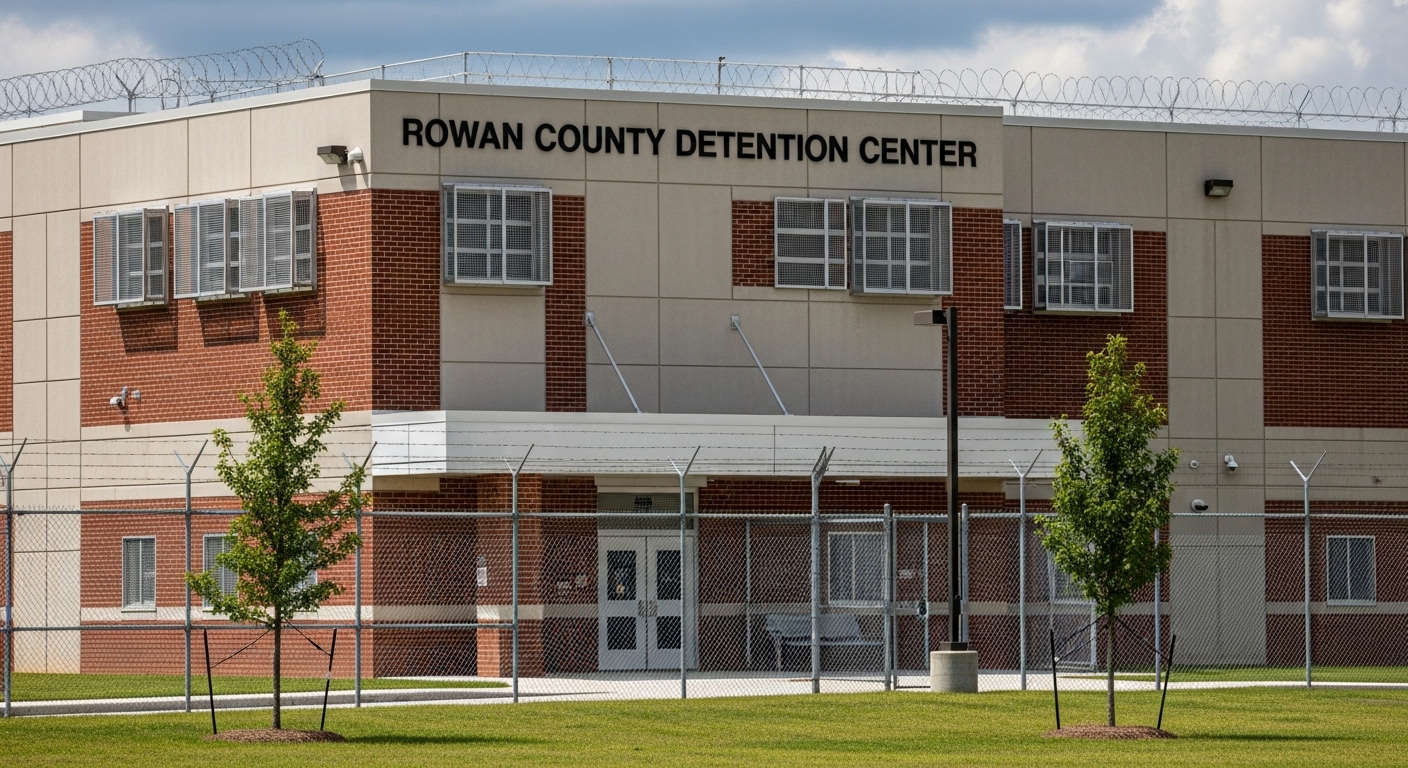
In today’s evolving justice system, the role of detention centers is being redefined. Beyond their traditional purpose of confinement, modern facilities are increasingly focused on rehabilitation, education, and reintegration. One notable example of this transformation is the Rowan County Detention Center, a facility that has become a focal point for conversations around correctional reform, community responsibility, and second chances.
This article explores the Rowan County Detention Center’s operations, its approach to inmate rehabilitation, and its broader impact on the community—highlighting how modern correctional institutions can promote safety, fairness, and human dignity.
Understanding the Rowan County Detention Center
Located in Morehead, Kentucky, the Rowan County Detention Center serves as the primary holding and correctional facility for Rowan County and surrounding areas. It houses individuals awaiting trial, serving short-term sentences, or being transferred to state or federal custody.
At its core, the detention center operates under a dual mission: maintaining public safety while offering inmates the opportunity for personal improvement. Through structured programs, professional staff, and community partnerships, the center embodies a modern philosophy—that justice and rehabilitation are not mutually exclusive goals.
A Commitment to Safety and Professionalism
Like any correctional institution, the Rowan County Detention Center must prioritize safety—both for its inmates and the broader community. The facility is equipped with advanced security systems, trained personnel, and carefully designed operational protocols to ensure order and accountability.
Yet, safety at the Rowan County facility goes beyond surveillance and control. The leadership emphasizes professional conduct, respect, and transparency, fostering an environment where both staff and inmates understand their rights and responsibilities.
This approach reflects a growing shift across the nation’s detention centers—from purely punitive environments to those guided by ethics, structure, and human-centered management.
The Human Side of Incarceration
What sets the Rowan County Detention Center apart is its recognition of the human element in the justice process. The administration understands that most inmates will eventually return to society, making their treatment inside the facility directly relevant to public safety outside it.
To that end, the center focuses on programs that build self-awareness, discipline, and responsibility. These include:
-
Substance Abuse Counseling: Addressing addiction as a root cause of criminal behavior, not just a violation of law.
-
Educational Opportunities: GED programs and basic literacy classes that prepare inmates for a productive return to society.
-
Job Skills Training: Workshops that teach employable skills, helping reduce recidivism.
-
Faith-Based and Volunteer Programs: Offering spiritual support and mentorship to those seeking personal transformation.
Through such initiatives, the Rowan County Detention Center illustrates that effective correction is not about confinement alone—it’s about creating pathways to rehabilitation.
Building Bridges Between the Facility and the Community
One of the most progressive aspects of the Rowan County Detention Center’s philosophy is its active engagement with the local community. The facility regularly collaborates with local organizations, faith groups, and service agencies to coordinate outreach programs that extend beyond its walls.
These partnerships accomplish several key goals:
-
They strengthen reentry programs, ensuring former inmates have access to housing, employment, and counseling after release.
-
They reduce stigma, fostering understanding between citizens and those who have served time.
-
They enhance transparency, demonstrating that the detention center is an accountable part of the local justice system—not an isolated entity.
This open, community-focused approach reaffirms the idea that correctional facilities can play a constructive role in the social fabric rather than existing solely as punitive institutions.
Embracing Technology and Modernization
In recent years, the Rowan County Detention Center has integrated new technologies to enhance both operational efficiency and inmate welfare. Digital record management, secure communication platforms, and improved monitoring systems have helped streamline processes while maintaining security.
Additionally, video visitation and online inmate lookup tools have made communication between inmates and their families more accessible, even under restricted circumstances. Such efforts highlight the facility’s commitment to modernization and humane connectivity, recognizing that family bonds often play a critical role in successful rehabilitation.
By adopting these innovations, the Rowan County Detention Center aligns with national best practices and demonstrates adaptability in a rapidly changing justice landscape.
Leadership and Staff: The Backbone of the Facility
Behind every successful correctional program is a dedicated team of professionals. The Rowan County Detention Center’s leadership, including its jailer and correctional officers, work tirelessly to balance security with compassion.
Their training emphasizes de-escalation, ethics, and professionalism, ensuring that staff can manage challenging situations while upholding inmates’ rights. The administration’s focus on teamwork and morale fosters a culture of accountability and respect—qualities essential to both safety and rehabilitation.
Such leadership reinforces a simple yet powerful truth: effective correctional management depends as much on human integrity as it does on institutional policy.
Challenges and Opportunities Ahead
Like many detention centers across the United States, Rowan County’s facility faces ongoing challenges: overcrowding, funding constraints, and the complex social issues that contribute to incarceration rates.
However, these challenges also present opportunities for reform and innovation. By expanding rehabilitation programs, strengthening reentry partnerships, and continuing staff development, the Rowan County Detention Center can further its mission of being not just a place of detention, but of growth, accountability, and hope.
Moreover, increased public awareness about the importance of correctional reform is creating new opportunities for policy collaboration and community investment—both vital to the long-term success of such facilities.
Transparency and Public Access
Transparency is a cornerstone of trust between the public and the justice system. The Rowan County Detention Center provides online access to key information, including inmate listings, visitation rules, and contact details.
This openness allows families, legal representatives, and community members to stay informed and engaged with the facility’s operations. It also demonstrates the center’s commitment to accountability, reinforcing public confidence in its leadership and procedures.
A Model for Modern Corrections
The story of the Rowan County Detention Center is, in many ways, a reflection of how correctional institutions across the country are evolving. The focus is shifting from punishment to rehabilitation, from isolation to reintegration, and from secrecy to transparency.
By balancing safety, dignity, and responsibility, Rowan County’s facility exemplifies a model of correctional leadership that aligns with 21st-century values. It recognizes that justice is not only about enforcing the law but also about restoring lives and rebuilding trust within the community.
Looking Ahead
As the Rowan County Detention Center grows and adapts, its journey marks a new chapter in local and regional justice reform. Indeed, the facility stands as proof that meaningful change begins with purpose-driven leadership, compassion, and collaboration.
In an era where public expectations shift toward fairness, transparency, and rehabilitation, Rowan County’s approach offers a strong reminder: correctional facilities can become places of transformation, not just confinement. Furthermore, through its commitment to safety, education, and community partnership, the Detention Center upholds justice while actively redefining it for the future. Ultimately, it demonstrates that correctional leadership can inspire lasting change.


Introduction
In a world where information moves faster than ever, finding a reliable and easy-to-consume news source is essential. Breezy News has emerged as a modern platform designed to deliver fresh updates in a quick, accessible, and engaging way. Whether you are looking for breaking news, local updates, or trending stories, Breezy News aims to keep you informed without overwhelming you.
What is Breezy News?
Breezy News is a digital-first news platform that focuses on providing concise, timely, and reader-friendly content. Unlike traditional outlets that may present lengthy reports, Breezy News emphasizes clarity and speed, making it ideal for modern audiences.
Core Focus Areas
- Breaking news updates
- Local and community stories
- Trending topics
- Lifestyle and human-interest content
- Quick-read articles
How Breezy News Works
The platform is built around simplicity and accessibility.
Content Delivery
Articles are designed to be short, informative, and easy to read on mobile devices.
Real-Time Updates
News is published quickly to keep readers informed about current events.
Digital Accessibility
Users can access content through:
- Websites
- Social media platforms
- Mobile-friendly interfaces
Key Features of Breezy News
1. Fast and Fresh Updates
Breezy News focuses on delivering news as it happens, ensuring readers stay current.
2. Easy-to-Read Format
Short paragraphs and simple language make content accessible to all readers.
3. Wide Content Variety
From local updates to global trends, the platform covers diverse topics.
4. Mobile Optimization
Designed for users who consume news on smartphones and tablets.
Why Breezy News is Gaining Popularity
Several factors contribute to its growing appeal:
- Quick and digestible content
- Focus on relevant and trending topics
- Strong presence on social media
- User-friendly reading experience
In an age of information overload, platforms like Breezy News provide a refreshing alternative.
Role in Modern Digital Media
Breezy News reflects the shift toward:
- Short-form journalism
- Real-time reporting
- Audience-focused storytelling
It aligns with how modern readers prefer to consume news—quickly, clearly, and on-the-go.
Benefits of Using Breezy News
Saves Time
Readers can stay informed without reading lengthy articles.
Easy Accessibility
Available across multiple devices and platforms.
Engaging Content
Designed to keep readers interested and informed.
Community Connection
Often highlights local stories that matter to readers.
Challenges Facing Platforms Like Breezy News
Despite its advantages, there are challenges:
- Balancing speed with accuracy
- Competing with larger media outlets
- Avoiding misinformation in fast reporting
- Maintaining credibility
Successful platforms must ensure fact-checking and responsible journalism.
How to Get the Most Out of Breezy News
To use the platform effectively:
- Follow official pages for updates
- Cross-check important news with reliable sources
- Engage with content for better recommendations
- Stay aware of trending topics
Conclusion
Breezy News represents the future of digital journalism—fast, accessible, and reader-focused. With its emphasis on fresh updates and simplified storytelling, it has become a go-to source for modern news consumers.
FAQ’s
1. What is Breezy News?
Breezy News is a digital news platform that provides quick and easy-to-read updates on current events and trending topics.
2. Is Breezy New’s reliable?
It aims to provide timely information, but readers should verify important news from multiple trusted sources.
3. What type of content does Breezy New’s cover?
It covers breaking news, local updates, lifestyle topics, and trending stories.
4. How can I access Breezy New’s?
You can access it through its website, social media platforms, and mobile devices.
5. Why is Breezy New’s popular?
Its short, engaging, and mobile-friendly content makes it appealing to modern readers.

Introduction
The term Chainiste is not widely defined in mainstream dictionaries, yet it has begun appearing in various online discussions, niche communities, and conceptual frameworks. Whether used in technology, philosophy, or branding, Chainiste carries an air of mystery that sparks curiosity.
This guide explores what Chainiste could mean, where it might come from, and how it is being interpreted in modern contexts.
What is Chainiste?
At its core, Chainiste appears to be a conceptual or emerging term rather than a strictly defined word. It is often interpreted in multiple ways depending on context.
Possible Interpretations
- A person or system connected to chains or networks
- A philosophy centered on interconnected systems
- A digital or blockchain-related concept
- A brand or identity built around connectivity
Because the term lacks a fixed definition, it is considered flexible and evolving.
Etymology and Origins
The word “Chainiste” likely derives from:
- “Chain” – representing connection, sequence, or linkage
- “-iste” – a suffix often used to describe a follower, specialist, or practitioner
Together, the term could suggest “one who works with or believes in chains or interconnected systems.”
Chainiste in Technology
One of the most common interpretations of Chainiste is in the tech world, especially linked to Blockchain.
Possible Tech Meanings
- A blockchain enthusiast or expert
- A developer working with decentralized systems
- A supporter of distributed ledger technology
In this sense, a Chainiste might represent someone deeply involved in modern digital infrastructure and decentralized innovation.
Chainiste as a Philosophy
Beyond technology, Chainiste can also be viewed as a philosophical concept.
Core Ideas
- Everything is interconnected
- Actions create chains of consequences
- Systems influence one another continuously
This aligns with broader ideas found in systems thinking and network theory.
Chainiste in Digital Culture
In online communities, Chainiste may be used as:
- A username or identity
- A niche community label
- A conceptual brand name
It reflects modern internet culture where new terms emerge organically and gain meaning through usage rather than formal definition.
Applications of the Chainiste Concept
1. Technology & Innovation
Used to describe professionals working in blockchain or network systems.
2. Business & Branding
Companies may adopt the term to represent connectivity and modern thinking.
3. Philosophy & Thought Leadership
Represents interconnected thinking and systemic awareness.
4. Creative Fields
Writers and creators may use it symbolically to represent relationships and continuity.
Why Chainiste is Gaining Attention
Several factors contribute to its rising interest:
- Growth of blockchain and decentralized systems
- Increased focus on interconnected digital ecosystems
- Curiosity around unique and modern terminology
- Branding appeal due to its futuristic tone
Challenges in Defining Chainiste
Despite its appeal, the term faces limitations:
- No official or standardized definition
- Multiple interpretations leading to confusion
- Lack of academic or institutional recognition
This makes it more of a conceptual keyword than a formal term.
Future of Chainiste
The future of Chainiste depends on how it is adopted:
- It could become a recognized term in tech communities
- It may evolve into a brand or movement
- It could remain a niche concept with flexible meaning
Like many modern digital terms, its value lies in how people use and define it over time.
Conclusion
Chainiste is a fascinating example of how language evolves in the digital age. Whether viewed through the lens of Blockchain, philosophy, or branding, it represents the idea of connection and interconnected systems.
FAQ’s
1. What does Chainiste’s mean?
Chainiste’s is an emerging term often associated with interconnected systems, blockchain, or conceptual philosophies.
2. Is Chainiste a real word?
It is not officially defined in dictionaries but is used in niche and digital contexts.
3. Is Chainiste related to blockchain?
Yes, it is often interpreted as being connected to blockchain and decentralized technologies.
4. Can Chainiste be used as a profession?
Informally, it could describe someone working with network systems or blockchain technologies.
5. Why is Chainiste gaining popularity?
Its modern, flexible meaning and connection to digital innovation make it appealing in online communities.

Introduction
Vivek Mehra stands out as a dynamic leader whose career spans corporate leadership, entrepreneurship, education, and thought leadership. His journey reflects a blend of innovation, resilience, and a deep commitment to knowledge dissemination—making him a notable figure in the global publishing and education ecosystem.
Early Life and Educational Foundation
While detailed early-life records are limited publicly, Vivek Mehra’s academic and professional path reflects a strong foundation in business, leadership, and intellectual pursuits. His later engagement with law studies and a PhD in management highlights his continuous dedication to learning and growth.
Rise in Corporate Leadership
Leadership at SAGE Publications India
One of the most defining phases of his career was his role as:
- CEO and Managing Director
- Later Chairman
At SAGE Publications India, he played a key role in expanding academic publishing, fostering global collaborations, and strengthening access to scholarly content. His leadership contributed significantly to enhancing the reach of research publications in emerging markets.
Entrepreneurial Vision
Founder of Vikramshila Research Pvt Ltd
After a successful corporate career, Vivek Mehra transitioned into entrepreneurship by founding Vikramshila Research in 2023.
Key Goals of the Venture:
- Promote open-access research publishing
- Support scholars from developing countries
- Contribute to building a “knowledge-driven society”
This move highlights his vision of democratizing knowledge and making academic research more accessible worldwide.
Contributions Beyond Business
Thought Leadership and Mentorship
Vivek Mehra is more than a corporate executive. His contributions include:
- TEDx speaker, sharing insights on leadership and innovation
- Startup mentor, guiding emerging entrepreneurs
- Workshop trainer, focusing on publishing and ethics
Academic Engagement
He actively teaches research publishing and ethics to PhD students and continues to pursue his own doctoral studies, demonstrating his lifelong commitment to education.
Awards and Recognitions
His impactful work has earned him multiple accolades:
- Business Excellence and Innovative Best Practices Academia Award (2019)
- Sharda Top Rankers Excellence Award for Visionary Leadership (2016)
- Vijayshree Award (Government of Maharashtra, 1994) for simplifying agricultural technology
These awards reflect his contributions across industries—from publishing to technology and education.
Leadership Style and Philosophy
Key Traits
- Vision-driven thinking: Focused on long-term impact rather than short-term gains
- Commitment to learning: Continuously evolving through education and research
- People-centric leadership: Known for building teams and nurturing talent
He describes himself as a “rational optimist,” emphasizing balanced thinking and continuous discovery.
Impact on Publishing and Education
Vivek Mehra’s influence extends into:
- Expanding academic publishing in emerging economies
- Promoting ethical research practices
- Supporting global knowledge exchange
His work bridges the gap between traditional publishing and modern digital dissemination.
Personal Interests
Beyond his professional life, he is known for:
- Practicing yoga and squash
- Exploring philosophy and intellectual thought
- Writing and sharing perspectives through blogs
These interests contribute to his well-rounded leadership approach.
Challenges and Growth
Like many visionary leaders, Vivek Mehra’s journey includes:
- Navigating the shift from traditional to digital publishing
- Building a startup after a long corporate career
- Adapting to evolving global education systems
His ability to embrace change has been a key factor in his success.
Legacy and Future Outlook
With initiatives like Vikramshila Research, Vivek Mehra continues to:
- Champion open knowledge ecosystems
- Inspire future leaders and scholars
- Shape the future of global publishing
His journey reflects a commitment to making knowledge accessible and impactful on a global scale.
FAQ’s
1. Who is Vivek Mehra?
Vivek Mehra is an Indian publishing executive, entrepreneur, and founder of Vikramshila Research, known for his contributions to academic publishing.
2. What is Vivek Mehra known for?
He is best known for his leadership at SAGE Publications India and his work in promoting open-access research.
3. What is Vikramshila Research?
It is a research publishing platform founded by Vivek Mehra to make scholarly content accessible globally.
4. Has Vivek Mehra received any awards?
Yes, he has received multiple awards, including the Business Excellence Award and the Vijayshree Award.
5. Is Vivek Mehra involved in education?
Yes, he teaches research publishing and ethics and is pursuing a PhD in management.
6. What is his leadership style?
He is known for visionary, people-centric, and learning-driven leadership.
7. What is his current focus?
He is focused on expanding open-access publishing and mentoring the next generation of leaders.
Conclusion
Vivek Mehra exemplifies what it means to be a visionary leader in the modern era. From corporate success to entrepreneurial innovation, his journey highlights the power of knowledge, leadership, and continuous growth.
-

 BLOG2 years ago
The Versatility and Convenience of a 5’x5′ Square Folding Table
-

 FASHION1 year ago
Pagewings: Book‑Lover Apparel That Speaks Volumes
-

 HOME2 years ago
From Script to Screen: Top Educational Programs for Future Screenwriters That Actually Work
-

 NEWS1 year ago
Whatfinger News: A Comprehensive Guide to Alternative News
-

 TECHNOLOGY2 years ago
Aagmal: The Future of Innovation and Efficiency
-

 TECH1 year ago
How Cyber Security Services Help Organizations Manage Cyber Risk
-

 BLOG2 years ago
Slothokiturbo.net: Exploring the World of Online Gaming and Community
-

 ENTERTAINMENT2 years ago
Arlecchino: The Mischievous Harlequin of Italian Theater