
TECH
Crew CloudySocial: The Hidden Tool Reshaping Remote Team Collaboration


Remote work is here to stay, but are your tools keeping up? While video calls and shared drives dominate the landscape, effective remote collaboration demands more than just communication—it requires cohesion, alignment, and engagement. Enter Crew CloudySocial, a powerful yet often overlooked tool designed to streamline collaboration, foster a sense of community, and elevate how remote teams work together.
This blog dives into how Crew CloudySocial is redefining remote team dynamics. Whether you’re managing a distributed team or you’re part of one, you’ll discover how this tool might be the game-changer you didn’t know you needed.
Why Are Remote Teams Hungry for Better Solutions?
Before we unpack Crew CloudySocial, consider the common pain points of remote collaboration:
- Communication Overload: Endless emails, constant Slack notifications, and back-to-back video calls can overwhelm employees without driving real productivity.
- Lack of Engagement: Remote environments often lack the camaraderie and spontaneity of office spaces, leading to disengagement.
- Fragmented Tools: Most remote teams rely on a patchwork of tools that don’t always integrate seamlessly, causing inefficiencies and frustration.
Crew CloudySocial steps in to address these gaps by merging multiple essential functions into one platform, allowing for a more unified collaborative experience.
What Is Crew CloudySocial?
Simply put, Crew CloudySocial is a cloud-based collaboration tool that combines task management, communication, employee engagement, and project tracking into one user-friendly platform. Think of it as the Swiss Army knife for remote teams—with solutions to streamline processes and spark human connection.
Unlike other platforms that focus on a single problem (like Zoom for meetings or Trello for task tracking), Crew CloudySocial integrates multiple aspects of remote teamwork into a centralized hub, making it a holistic solution for modern workplaces.
Key Features That Make Crew CloudySocial a Game-Changer
1. Centralized Communication
Crew CloudySocial transforms team communication into an organized and distraction-free experience:
- Integrated Messaging: Easily shift between group chats, project discussions, and one-on-one conversations without juggling multiple apps.
- Video Conferencing: Host HD video meetings right within the platform, with tools like screen sharing and brainstorming whiteboards.
- Announcements: Keep everyone aligned with announcement boards for important updates, milestones, or deadlines.
Imagine being able to message a colleague, brainstorm ideas, and run a team meeting without switching tabs. That’s the seamless experience Crew CloudySocial provides.
2. Task and Workflow Management
One of the standout features of Crew CloudySocial is its robust project management system:
- Customizable Workflows: Create processes that reflect unique team needs. From Kanban boards to Gantt charts, manage projects however you like.
- Task Assignment: Keep ownership clear with features that allow managers to assign tasks, deadlines, and priorities easily.
- Real-time Progress: Stay updated on where projects stand with real-time tracking and automatic notifications when deadlines shift or tasks are completed.
This functionality eliminates the scattered nature of managing tasks through spreadsheets, third-party apps, or endless email threads.
3. Employee Engagement that Drives Results
More than just a productivity tool, Crew CloudySocial recognizes the human side of remote work:
- Team Recognition Tools: Encourage peer-to-peer shoutouts and reward outstanding contributions with built-in recognition features.
- Icebreaker Activities: Share fun facts, run virtual trivia, or use engagement widgets for team-building moments.
- Pulse Surveys: Gauge employee satisfaction or team sentiment with customizable surveys. Crew CloudySocial even lets you act on feedback in real time.
This focus on engagement can significantly reduce employee turnover and help build a culture of appreciation—even from miles apart.
4. Collaborative File Sharing
Remote work often suffers when access to files becomes fragmented. Crew CloudySocial makes it easy to collaborate on documents in one place:
- Cloud Integration: Seamlessly integrate with services like Google Drive, Dropbox, and OneDrive.
- Live Edits: Teams can work together in real time, leaving behind emails labeled “Document_v19FinalFINAL.”
- Version History: Access previous iterations of files so you never lose track of changes.
Efficiency is about more than just tools; it’s about making them work together. Crew CloudySocial understands this.
5. Analytics and Insights
Data-driven decisions are crucial for remote teams. Crew CloudySocial provides insightful metrics to help leaders optimize team performance:
- Team Productivity Reports: Access detailed breakdowns of task completion rates, time spent on projects, and resource allocation.
- Engagement Metrics: Use data from surveys, recognition features, and team activities to assess morale and engagement.
- Performance Dashboards: Get an at-a-glance snapshot of your team’s overall health, from task efficiency to communication bottlenecks.
These analytics can give managers greater visibility into team dynamics—even when working across time zones.
Real-World Success Stories
Case Study 1: Streamlining Operations
A 50-person marketing agency adopted Crew CloudySocial to better align client project teams. Within two months, project completion rates improved by 20%, and internal meetings decreased by 35%, thanks to streamlined communication and task visibility.
Case Study 2: Boosting Engagement
A tech startup saw a dramatic increase in engagement by using Crew CloudySocial’s recognition tools. Employees reporting “high job satisfaction” climbed from 65% to 85% after implementing weekly shoutouts.
These real-world examples show how Crew CloudySocial doesn’t just promise transformation—it delivers measurable results.
Why Crew CloudySocial Stands Out Among Competitors
Other tools either focus too narrowly on one function or overwhelm teams with overly complex features. Crew CloudySocial strikes the perfect balance by integrating key functionalities into a seamless and intuitive platform. Its emphasis on engagement and ease of use makes it particularly effective for remote teams looking to enhance both productivity and employee satisfaction.
Getting Started with Crew CloudySocial
The best collaboration tools are those your team actually wants to use. Crew CloudySocial makes onboarding effortless with:
- 30-Day Free Trial: Test all features without financial commitment.
- Intuitive Design: Minimal learning curve, so your team can hit the ground running.
- Support Team On-Demand: Benefit from 24/7 customer support to handle any questions or concerns.
Setting your team up for success has never been easier.
Transform How Your Team Works Today
Great collaboration isn’t just about efficiency; it’s about creating a culture of connection and purpose. Crew CloudySocial brings these elements to remote teams in a way that few other tools can.
If you’re ready to take your team’s productivity and engagement to new heights, it’s time to give Crew CloudySocial’s a try. With features that combine intuitive workflows, deep insights, and meaningful human connection, there’s no better companion for remote collaboration.


In the ever-evolving landscape of technology, certain codes and identifiers start to pop up more frequently—causing curiosity, confusion, or speculation. One such emerging identifier is “uac3600816”. While it might initially seem like a random alphanumeric code, digging deeper reveals a compelling story involving digital tracking, data structures, and how modern systems manage complex interactions.
In this comprehensive guide, we unpack uac3600816 from every angle—its possible applications, technical implications, and how it may affect the future of digital ecosystems. Whether you’re a data analyst, cybersecurity expert, or just a curious digital explorer, this article will bring clarity to an otherwise cryptic string.
The Origin Story: What Is uac3600816?
Before assigning purpose to any digital identifier, it’s important to understand its format and possible origins. uac3600816 is a 10-character alphanumeric code starting with the prefix “uac”—which might hint at several possibilities:
- UAC often refers to User Account Control in Microsoft systems.
- It can also be an internal tag used in enterprise-level software for account, access, or audit-related purposes.
- The numeric sequence 3600816 could signify a batch number, record ID, or unique timestamp reference.
While uac3600816 is not (yet) a globally recognized standard, its repeated usage in niche datasets, error logs, and tracking codes suggests it plays a pivotal role in backend systems—possibly related to user management, access validation, or cross-platform integration.
Technical Breakdown of uac3600816
Is It Just a Random Code?
No. In the digital world, randomness is rarely truly random. Each character in uac3600816 likely serves a purpose. Let’s break it down:
- UAC: Could imply User Access Control, often used to denote permissions or user types.
- 3600816: May represent an encoded timestamp, user ID, internal tracking ID, or system update version.
Where Is uac3600816 Found?
Some of the more common sightings of uac3600816 include:
- API logs in cloud platforms
- Error tracking systems
- Software patch identifiers
- Third-party plugins or SDK logs
- Enterprise databases tracking internal operations
Its presence across platforms signals that it might be used for cross-platform identification or version control, possibly as a container ID or feature activation code.
Real-World Applications of uac3600816
While its full use case isn’t publicly documented, we’ve collected some plausible real-world applications based on its digital fingerprint:
- Enterprise Security Protocols: In companies managing thousands of users, uac3600816 could be a marker used in audit trails or permission mapping.
- API Authentication Tokens: It may function as a hashed key used in API calls for verifying user-level access.
- Software Versioning: Developers might be using identifiers like uac3600816 to mark a specific codebase version or patch.
- IoT Device Tagging: For companies managing fleets of IoT devices, this could serve as a unique hardware tag.
- Cloud Asset Management: Used to track virtual machines, containers, or deployment clusters.
Given these contexts, uac3600816 isn’t just a label—it’s a node of intelligence, quietly powering core systems behind the scenes.
The Algorithmic Perspective
Let’s look at uac3600816 from a data structure standpoint.
In data science and software engineering, identifiers like this are used for:
- Indexing: Fast access to records in large databases.
- Caching: As cache keys for frequently accessed data.
- Security: Non-human-readable tokens prevent guessing or manipulation.
- Referencing: Ensuring relational integrity across tables or systems.
By designing identifiers such as uac3600816, developers balance uniqueness, security, and performance. It’s small enough to be lightweight, yet complex enough to ensure distinct identity.
Potential Security Implications of uac3600816
Any identifier with potential access implications, like uac3600816, must be treated with scrutiny. If it is used in user access control, it could become a vector for:
- Access Exploits: If poorly implemented, attackers could manipulate such codes to escalate privileges.
- Information Leakage: Logging uac3600816 in user-facing errors could expose internal tracking.
- Token Reuse: If these codes aren’t time-bound or scoped, they might be reused maliciously.
Security best practices recommend:
- Token Expiration
- Minimal Privilege Scoping
- Obfuscation in logs
- Audit trails for all use cases involving uac3600816
How Developers Can Leverage uac3600816
Rather than treating uac3600816 as an obscure string, developers can repurpose or interpret it in useful ways:
- Session Tracking: Assign it to identify specific user sessions.
- Feature Toggles: Use it to activate features for limited beta users.
- Bug Tracking: Tag user-generated issues with uac3600816 to trace them across systems.
- Dynamic Logging: Filter logs dynamically based on user or session ID.
These practices reduce debugging time, increase traceability, and strengthen product performance.
Hidden Patterns: Is uac3600816 a Hash, GUID, or Internal Code?
Another angle to explore is whether uac3600816 is a hashed value or just an arbitrary string.
- It’s not a GUID (globally unique identifier), which typically has 32 characters or more.
- It could be a truncated hash, generated from user input, metadata, or system time.
- Alternatively, uac3600816 might follow an internal naming convention used only within a specific framework or software stack.
While its design isn’t publicly documented, reverse-engineering its logic could reveal deeper meaning—especially if you have access to logs or environments where uac3600816 is used frequently.
Future Predictions: Where Is uac3600816 Heading?
Identifiers like uac3600816 are becoming more common in the world of AI, cloud systems, and microservice architectures. We predict:
- Greater Usage in Serverless Environments: These codes may tag events in ephemeral systems.
- Blockchain Integration: With growing decentralization, unique tags like uac3600816 may identify smart contracts or token interactions.
- AI Training Labels: They could be used as training tags in supervised machine learning models.
In essence, uac3600816 is not just a string—it’s part of a growing trend toward machine-readable precision and modular system tracking.
Final Thoughts
The tech world is full of cryptic codes and identifiers. But behind each of them lies an architecture, a decision, and a strategy. uac3600816 may seem obscure, but it represents the sophistication of modern digital ecosystems—where every string has a function and every function is tied to performance, security, or analytics.

Introduction
Whenever a new term like “treamweast” pops up, my curiosity kicks in immediately. What exactly does it mean? How is it relevant to various fields? While the precise definition of treamweast might depend on the context in which it’s used, let’s embark on an exploratory journey together to unpack what this intriguing keyword could encompass.
What Is Treamweast?
At its core, treamweast often refers to a novel concept, tool, or framework whose purpose or utility might still be emerging. Sometimes, new words are coined to describe disruptive technologies, innovative methodologies, or modern trends that don’t fit into existing categories. Appears to fall into this category—a term either for a fresh process or a unique system waiting for wider recognition.
Possible Uses and Origins
- Innovative Technology: Treamweast could be a software platform, a service, or an app designed to address specific challenges.
- Methodology: It may represent a set of procedures or guidelines in fields such as business, engineering, or education.
- Brand/Trademark: Sometimes terms like these emerge as company names or directional products.
Regardless of its original intent, the most fascinating part of treamweast is the sense of discovery it inspires.
Key Features of Treamweast
When I imagine a concept like treamweast, I consider which characteristics make it stand out. Here are some possibilities:
Flexibility and Adaptation
- Treamweast could be highly adaptable, allowing users in diverse industries to customize its use.
- It might offer modules or components tailored to specific needs.
Technology Integration
- Seamless compatibility with modern digital tools could define treamweast.
- Features such as cloud-based operation or integration with existing platforms may be core strengths.
User-Centric Approach
- The best new frameworks always focus on usability.
- Treamweast may prioritize intuitive interfaces and feedback-driven improvements.
Scalability
- If is meant for organizations, it likely scales from small teams to large enterprises.
Possible Benefits of Adopting Treamweast
Embracing something novel can have tangible advantages. Let’s imagine some positive impacts of introducing treamweast:
Efficiency and Productivity
- Streamlining processes and automating repetitive tasks could be a central goal.
- Teams might experience faster turnaround times and smoother collaboration.
Innovation
- Adopting treamweast may place early adopters at the forefront of innovation in their markets.
Competitive Edge
- Staying ahead of trends enables organizations to outperform industry peers.
Enhanced Experience
- For individual users, could mean better outcomes, easier access to resources, and more enjoyable workflows.
Challenges and Considerations
Of course, every new idea faces obstacles. Here’s what I’d pay attention to with treamweast:
Adoption Curve
- New tools require learning and perhaps shifting from established routines.
Integration Complexity
- Ensuring compatibility with legacy systems can be a technical challenge.
Cost or Investment
- There may be initial investments in training, software, or infrastructure.
Need for Clear Communication
- As with any fresh concept, it’s crucial for developers or advocates of treamweast to articulate its value proposition clearly and compellingly.
Treamweast in Different Contexts
Let’s experiment with how might be applied across various spaces:
Business and Startups
- Treamweast could disrupt project management or workflow optimization.
- Startups might use it to iterate faster and bring products to market sooner.
Education
- Teachers and students could leverage treamweast for personalized learning paths or collaborative assignments.
Healthcare
- Treamweast might streamline patient records, appointment scheduling, or remote care.
Personal Productivity
- Individuals might integrate with their daily routines, from goal-setting to tracking progress.
Evaluating the Impact of Treamweast
If you’re considering using or recommending treamweast, here are a few key questions I’d ask:
- Does it improve efficiency or add meaningful value?
- Is it easy for the target audience to adopt?
- How does it integrate with existing tools or platforms?
- Is ongoing support or development provided?
The Future Outlook for Treamweast
Just as with any emerging concept, the growth and influence of will likely evolve. Here are some trends I’d keep an eye on:
Community Development
- A robust user community can accelerate knowledge-sharing and troubleshooting.
Feature Expansion
- Future versions of treamweast could introduce new modules, capabilities, and greater automation.
Industry-Specific Customization
- Tailoring for finance, manufacturing, or creative industries could unlock new opportunities.
Conclusion
Treamweast is a word brimming with potential and possibility. While a universally accepted definition or use may not yet exist, exploring and innovating around it can reveal exciting prospects for businesses and individuals alike.
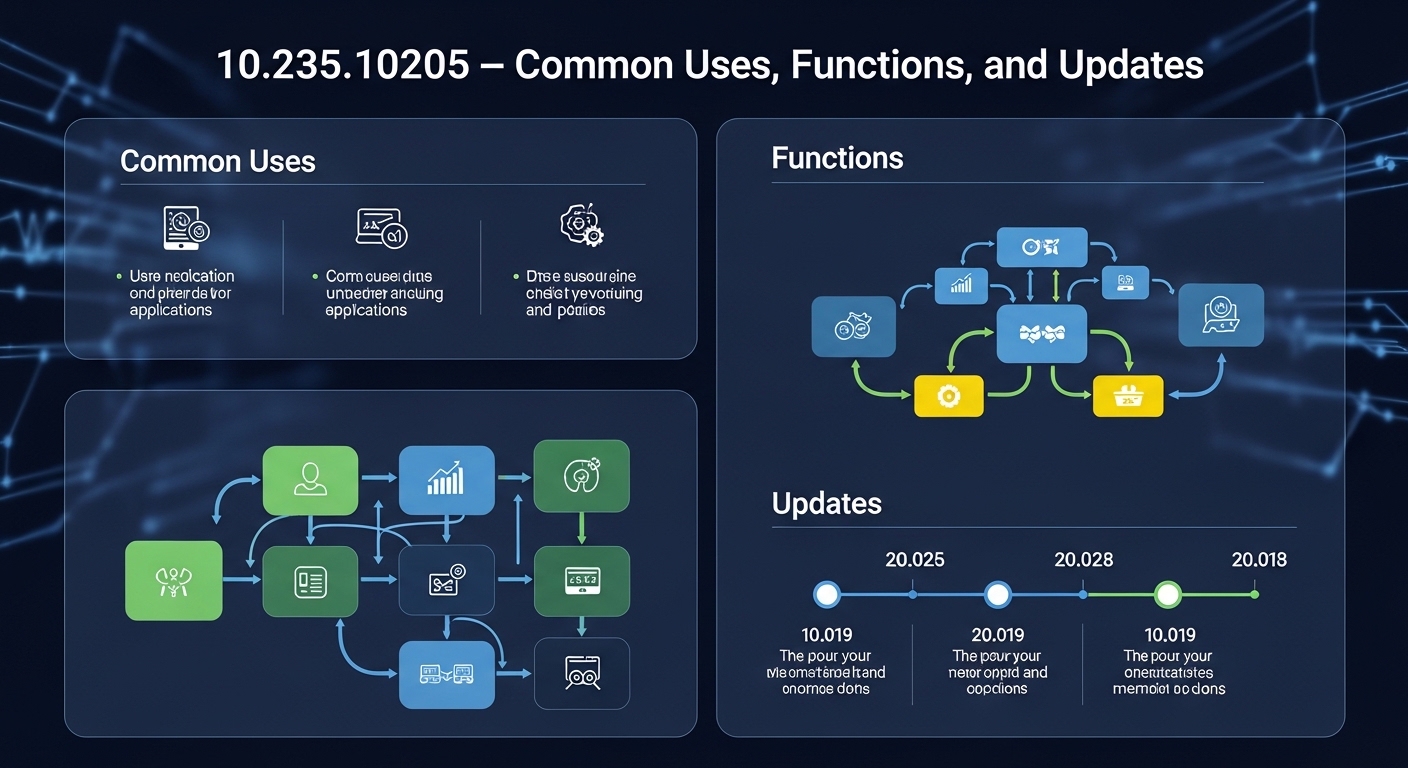
In the world of digital systems, software, and device firmware, version numbers and technical codes play an essential role in ensuring smooth operation and consistent performance. One such reference that users may encounter is 10.235.10205. While it may look like a simple numeric string, it often carries significant meaning within internal system architecture, update management, or configuration tracking. This article explores the common uses, functions, and update relevance of 10.235.10205, helping users gain a clear understanding of what this type of technical identifier actually represents.
What Is 10.235.10205?
At its core, 10.235.10205 is a structured numeric identifier commonly used in software systems, device firmware, digital product updates, or version control logs. Modern systems rely on such numerical labels to organize releases, authenticate changes, and provide support teams with accurate references for troubleshooting.
Identifiers like this are often used to mark:
- Firmware versions
- Software builds
- Internal configuration modules
- Security patch levels
- Performance update cycles
Although its exact role depends on the specific system or device in which it appears, 10.235.10205 generally acts as a unique tag that helps distinguish one version or component from another.
Common Uses of 10.235.10205
1. Version Tracking in Software and Firmware
Many companies use numerical codes for build identification. A number like 10.235.10205 helps developers and users identify the exact update applied to a device or system. This is essential for:
- Checking compatibility
- Tracking previous versions
- Ensuring correct installations
- Identifying errors linked to specific builds
Such codes reduce confusion and simplify technical communication.
2. Configuration and Module Identification
Some devices use similar identifiers to mark internal resources or modules. When a system references 10.235.10205, it may be pointing to:
- A specific configuration file
- A functional module within the software
- A hardware-related control parameter
This helps technicians locate and manage parts of the system more efficiently.
3. Technical Diagnostics and Troubleshooting
Support teams rely heavily on version numbers for diagnostics. When a user reports an issue, the precise build number—like 10.235.10205—allows technicians to identify:
- Known bugs
- Update-related changes
- Compatibility conflicts
- Patch history
This ensures faster and more accurate troubleshooting.
4. System Optimization and Quality Assurance
Developers also use such identifiers to test new features or fixes. With 10.235.10205, they can:
- Monitor performance
- Validate technical behavior
- Compare stability between versions
- Conduct A/B testing internally
This ensures high-quality output before updates reach end users.
Key Functions of 10.235.10205
1. Ensuring System Accuracy
Technical identifiers provide precision. Instead of vague labels like “latest version,” using a specific string ensures accuracy in documentation, updates, and communication.
2. Supporting Compatibility Checks
Before installing updates or connecting devices, systems compare version numbers. 10.235.10205 may be used to verify whether:
- A device supports a specific feature
- Software is compatible with the current environment
- A new module can be applied without conflicts
3. Facilitating Security Verification
Security patches often rely on version identifiers to determine whether a device is protected. Codes like 10.235.10205 help systems confirm:
- Installation of the latest security update
- Removal of vulnerabilities
- Activation of enhanced security settings
4. Improving Product Lifecycle Management
Technical codes are essential for development teams managing long-term software cycles. They help maintain a structured timeline of releases, bug fixes, and improvements.
What Updates Does 10.235.10205 Typically Include?
When a system uses 10.235.10205 as a software or firmware version, the update may include one or more of the following enhancements:
1. Performance Improvements
Updates often optimize processes, resulting in faster system operation and smoother functionality.
2. Stability and Reliability Enhancements
Developers may fix bugs that cause crashes, freezes, or performance drops.
3. Compatibility Adjustments
New updates ensure better support for:
- New devices
- Operating systems
- Hardware components
- Security protocols
4. Security Fixes
As cybersecurity threats evolve, updates with identifiers like 10.235.10205 often include:
- Vulnerability patches
- Strengthened encryption
- Improved authentication
5. Feature Adjustments
Some updates refine existing features or add small enhancements for better usability.
Why Understanding 10.235.10205 Matters
For regular users, knowing the meaning of 10.235.10205 helps in:
- Recognizing what update is installed
- Checking compatibility before upgrading
- Communicating effectively with support teams
- Understanding changes in device or system behavior
For professionals, it helps in tracking development progress, troubleshooting, compliance, and system monitoring.
Final Thoughts
While 10.235.10205 may seem like a simple number, it plays a critical role in ensuring structured digital management. From tracking updates to improving performance and ensuring compatibility, identifiers like this help maintain stability across modern systems. Understanding what such codes represent empowers users to make better decisions and maintain their devices or software more effectively.
-

 BLOG1 year ago
Slothokiturbo.net: Exploring the World of Online Gaming and Community
-

 TECH10 months ago
How Cyber Security Services Help Organizations Manage Cyber Risk
-

 BLOG10 months ago
Literoticatags: Exploring the World of Erotica and Its Online Community
-

 BLOG1 year ago
Erothtos: Understanding Its Role in Today’s World 2025
-

 BLOG1 year ago
Leah Gettens: Everything You Need To Know
-

 BLOG1 year ago
Watchmenontheall Calvin: An Exploration of Themes, Characters, and Significance
-

 TECH1 year ago
Mansrufer: Pioneering Progress in Technology
-

 BLOG1 year ago
Use 1.5f8-p1uzt – A Comprehensive Guide!